Your next customer is asking AI who to buy from. Will it recommend you?
Your customers are changing the way they find businesses. The question is whether your business is keeping up, or quietly disappearing from consideration.
For years, businesses have invested in websites, search engine optimisation, advertising and content to make sure customers can find them.
Some have done it well. Others have spent considerable sums without really understanding what they’ve achieved.
Now the rules of discovery are changing again.
Instead of searching Google, visiting half a dozen websites and comparing suppliers, customers can ask ChatGPT or another AI platform to do much of the research for them.
Who supplies this? Who has the best experience? Which business specialises in my industry? What are the alternatives? Who would you recommend?
And increasingly, they’re getting answers.
Think about that for a moment.
Your potential customer may be building a shortlist of suppliers without ever visiting your website.
So, is your business on that shortlist?
From searching to being recommended
This is a significant shift in how businesses are discovered.
Traditionally, the objective was to appear prominently in search results. Ideally on the first page of Google, preferably near the top.
That still matters.
But search is no longer exclusively about presenting a list of websites for someone to investigate.
AI can interpret a question, gather information, compare businesses and present a response that may include recommendations.
The customer has effectively delegated some of the research.
For established SMEs, particularly those selling specialist products or services, this creates both an opportunity and a problem.
The opportunity is to be discovered by customers who may never have encountered your business through conventional marketing.
The problem is that AI needs sufficient information and evidence to understand why your business is relevant.
If that information is missing, unclear or inconsistent, you’re making it harder to be considered.
And you might never know the opportunity existed.
Your website is not your entire digital presence
We’ve talked about digital real estate for years.
Your website is your principal owned asset, but your business exists across a much wider digital environment.
Industry directories, customer reviews, trade publications, professional associations, LinkedIn, news articles, case studies, independent references and numerous other sources contribute to how your business is represented online.
Collectively, they help establish what you do, who you serve and whether you’re credible.
This isn’t particularly new.
What’s changing is how that information can be discovered, interpreted and assembled.
AI systems can draw on information from multiple sources when forming answers. They don’t all operate in the same way, and there is no single formula that guarantees a recommendation.
But the commercial principle is straightforward.
If the market cannot clearly understand your business, why should you expect AI to understand it?
And if the only evidence of your expertise comes from your own website telling everyone how wonderful you are, perhaps it’s time to develop something more convincing.
Visibility, relevance, trust and credibility
There are four things we’d encourage any business owner to examine.
Visibility. Can your business actually be found when customers investigate the problems you solve, rather than simply searching for your company name?
Relevance. Is it immediately apparent who you help, what you offer and why your business is suitable for a particular requirement?
Trust. Is there credible evidence that you do what you claim? Real projects, genuine testimonials, established relationships and demonstrable results?
Credibility. Does the wider digital world support the picture you present of your business?
These aren’t four new marketing inventions created to accommodate AI.
They’re established commercial principles.
The technology is changing. The importance of being a credible, relevant business isn’t.
Stop producing content for the sake of producing content
One of the more irritating consequences of AI is the enormous volume of meaningless content it can produce.
Thousands of words generated in seconds, often saying remarkably little.
Generic advice, recycled observations and endless articles explaining the obvious.
We’ve all seen it.
Ironically, as producing content becomes easier, having something worthwhile to say becomes more important.
What do your customers actually want to know?
What problems are they experiencing?
What have you learnt from years of working in your industry?
What conventional thinking would you challenge?
What evidence can you share?
A manufacturer explaining why a particular material fails in certain conditions has something valuable to contribute.
An engineering company demonstrating how it resolved a difficult production problem has genuine authority.
A professional services business explaining the commercial consequences of a decision is far more useful than another article about its commitment to excellence.
Your experience is an asset.
Use it.
And don’t mistake publishing more content for communicating more value.
This isn’t about abandoning SEO
Inevitably, a new collection of acronyms has emerged.
AEO, GEO, AI SEO and various other descriptions of techniques intended to improve visibility within AI-generated answers.
Some of the work is entirely legitimate and useful.
But much of the underlying thinking will be familiar to anyone who understands good search optimisation, content strategy and brand positioning.
Build a technically sound website.
Make your information accessible.
Explain your proposition clearly.
Develop useful, authoritative content.
Establish relevant external references.
Make sure people can recognise and trust your business.
There are technical differences between search systems, and understanding them matters. But don’t assume that everything you previously invested in has suddenly become redundant.
Nor should you believe anyone promising guaranteed recommendations from ChatGPT.
There is no universal switch you can flick.
And being recommended by one AI platform, for one particular question, doesn’t establish that you’ll appear consistently across different systems, users and circumstances.
What should you actually do?
Before commissioning another expensive digital project, we’d suggest a little investigation.
Ask several AI platforms the questions your prospective customers might ask.
Don’t ask them to find your business by name. Ask them to recommend suppliers, specialists or service providers in your sector.
See what happens.
Which businesses are mentioned?
What makes those businesses relevant?
What evidence is presented?
Are you there?
Then look at your website and wider digital presence.
Does your proposition make sense to somebody who knows nothing about you?
Are your capabilities properly explained?
Do your case studies demonstrate anything meaningful?
Can somebody see why they should choose you over an alternative?
And are the sources that help establish your credibility actually visible online?
This exercise isn’t definitive research into AI rankings. Results change, and isolated responses can be misleading.
But it can reveal weaknesses in how your business is positioned and represented.
From there, develop a proper plan.
Not simply to appear in AI answers, but to improve the entire journey from discovery through to enquiry, customer acquisition and profitable growth.
The technology changes. The commercial principles remain.
Our work with technical businesses includes helping infoboss explain its data-management software and develop a partner-led route to market. That experience informs a practical question: how can a business make complex technology relevant to its customers?
Every development brings opportunities, new terminology and an enthusiastic collection of people selling the next big thing.
Some innovations genuinely change how markets operate.
Others simply provide new ways to do things we’ve always needed to do well.
The important question isn’t whether your business should be using the latest technology.
It’s where that technology can create a measurable commercial advantage, what is relevant to your business and what is worth investing in.
Because being found is only the beginning.
You still need to be relevant. You still need to be credible. You still need to persuade someone that you’re the right business to work with.
And ultimately, you still need to turn that opportunity into profitable revenue.
Your next customer may already be asking AI who to buy from.
Make your value impossible to overlook.
AlignandPull | Commercial Strategy & Growth
We help established businesses identify opportunities, strengthen their market position and develop the commercial strategy, marketing and digital presence needed to grow.
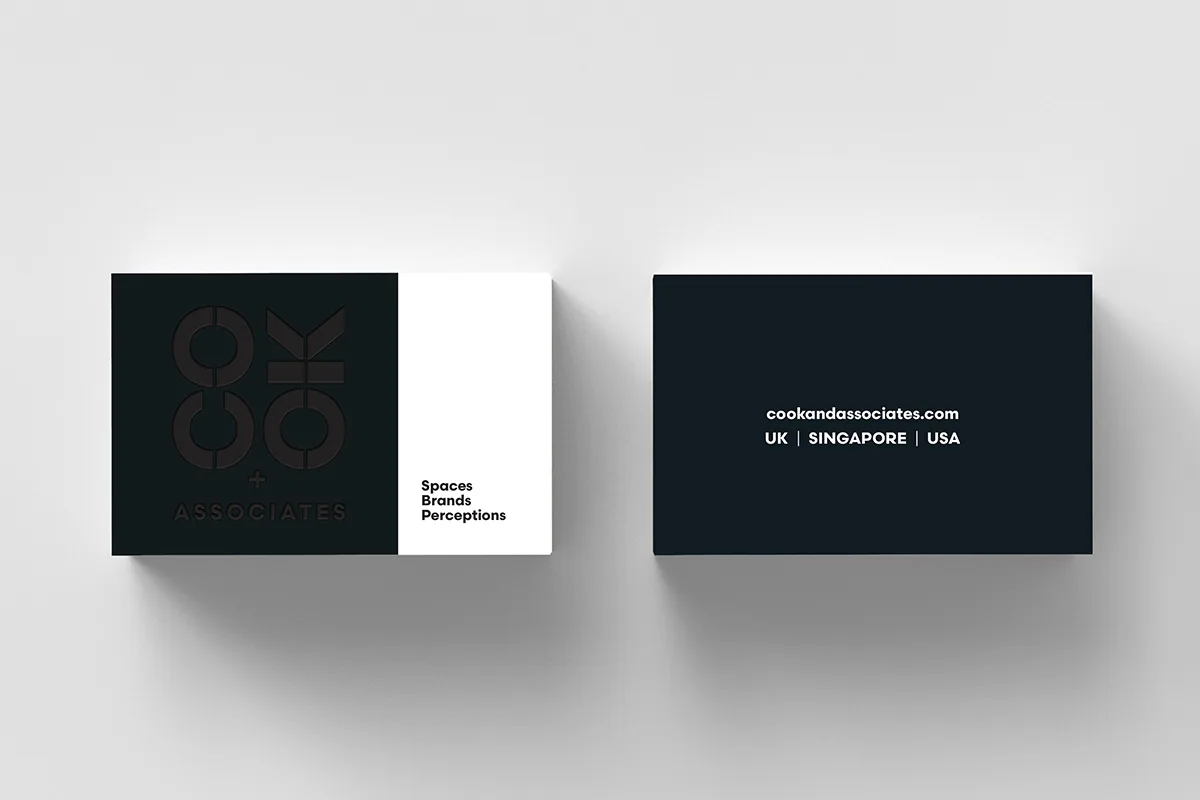
From our work / Cook + Associates
From thinking to practice.
Explore a project from our portfolio.
Explore the work